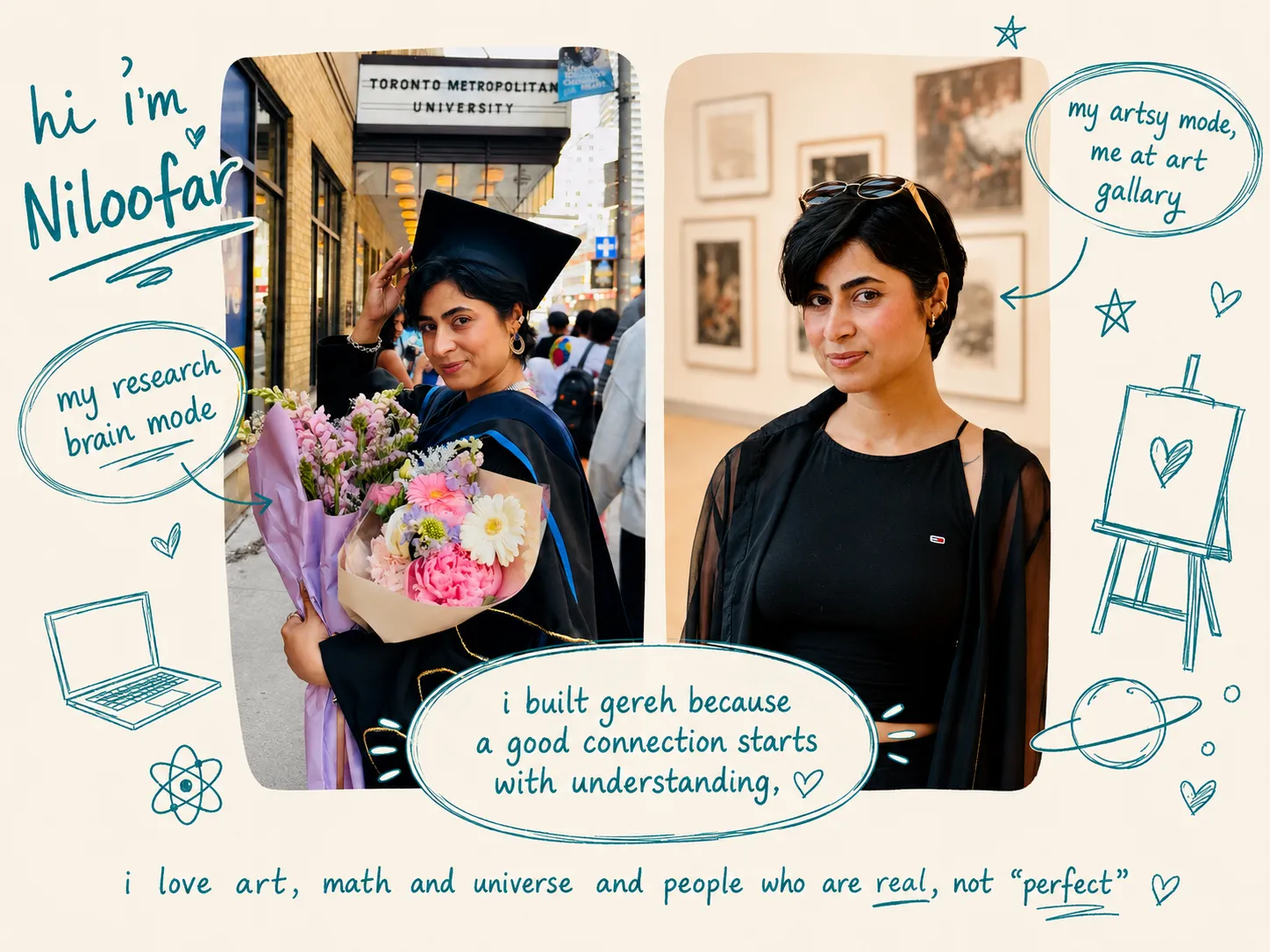
I was shy, not an introvert.
I think I have tried self-reflection, and improving my communication knowledge and skill, all my life.
As a child, everywhere but school, I was a shy kid. I would wait thirty minutes behind the door, practising saying "hi" to the guests. And then when I got to the living room, my "hi" would come out high pitched and thin, and the guests wouldn't hear me. And it would be my dad, thrilled to be saving me, replying back with a loud greeting, which made me the center of attention and made me feel a sense of embarrassment.
To those who didn't know me before eighteen years old, they assume I have always been this popular extrovert kid. Don't get me wrong, being an extrovert is not a compliment. But I have never been an introvert. I was shy. There's a fine line between shyness and introversion.
Because of working in a lab for years, my brain is wired with numbers, hypotheses, and facts, so I looked at the problem using a scientific approach. I read about it, did the homework, and went deeper and deeper into self-discovery, shame, communication skills, and psychology.
It all came to one thing. Gereh. To share what I learned here.
Nils, founder of Gereh
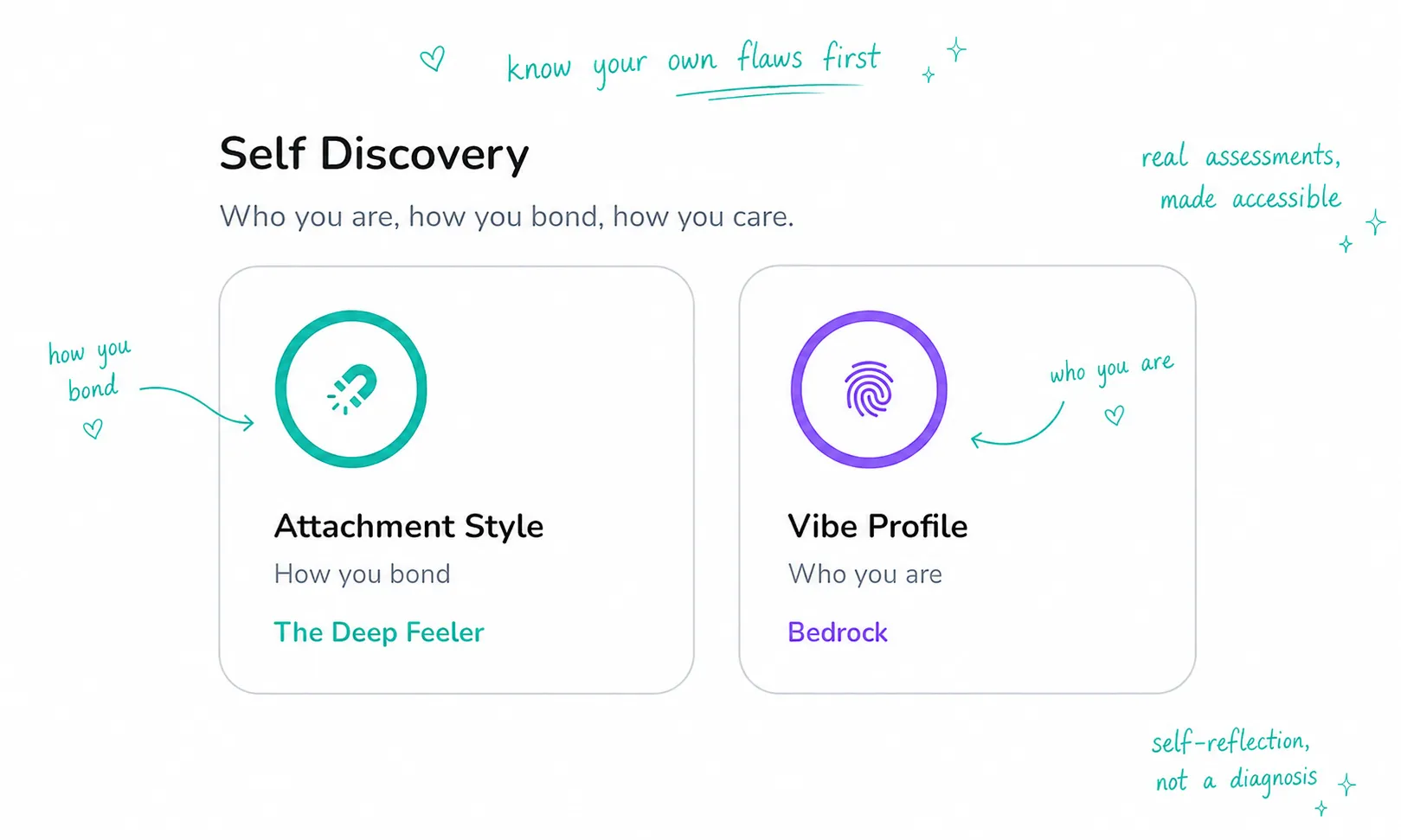
Know your own flaws first
As I was doing market validation and interviewing people, most were complaining about not having a real connection. But what is a real connection? It's hard to put into words. If I had to define it, I would say two people with shared vulnerabilities and emotional understanding. They want to be seen and heard and accepted for who they are. And vulnerability is sharing your flaws without the fear of judgment. So again I did my research. For that, first you have to know your own flaws and accept them without judging yourself. So I made real, legit assessments available to everyone, instead of leaving them gated behind fancy words and jargon. The internet is full of BuzzFeed tests, MBTI, and astrology, which is the proof that people love to know about themselves and use whatever they can find. So why not make the legit ones accessible?
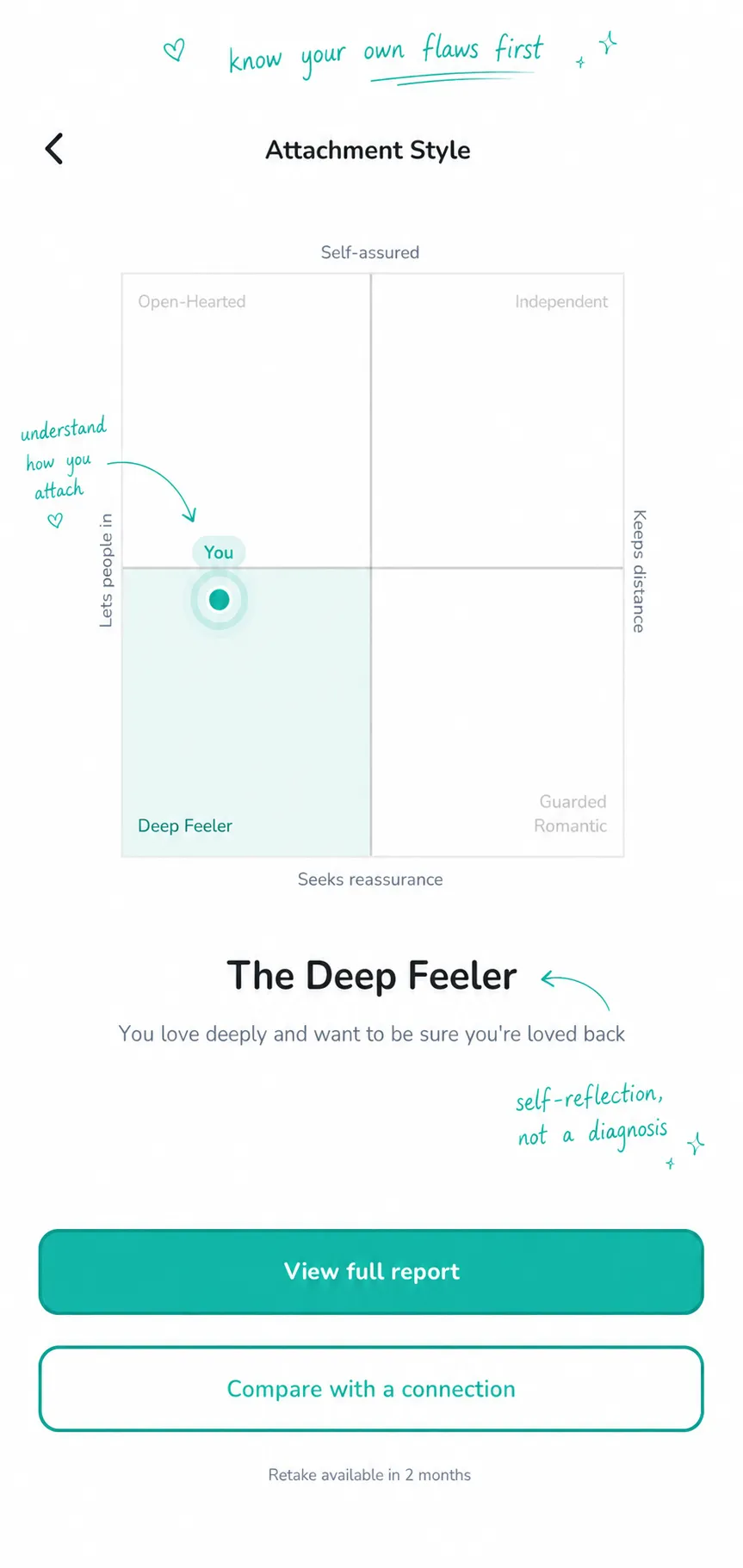
Self-reflection, not a diagnosis.
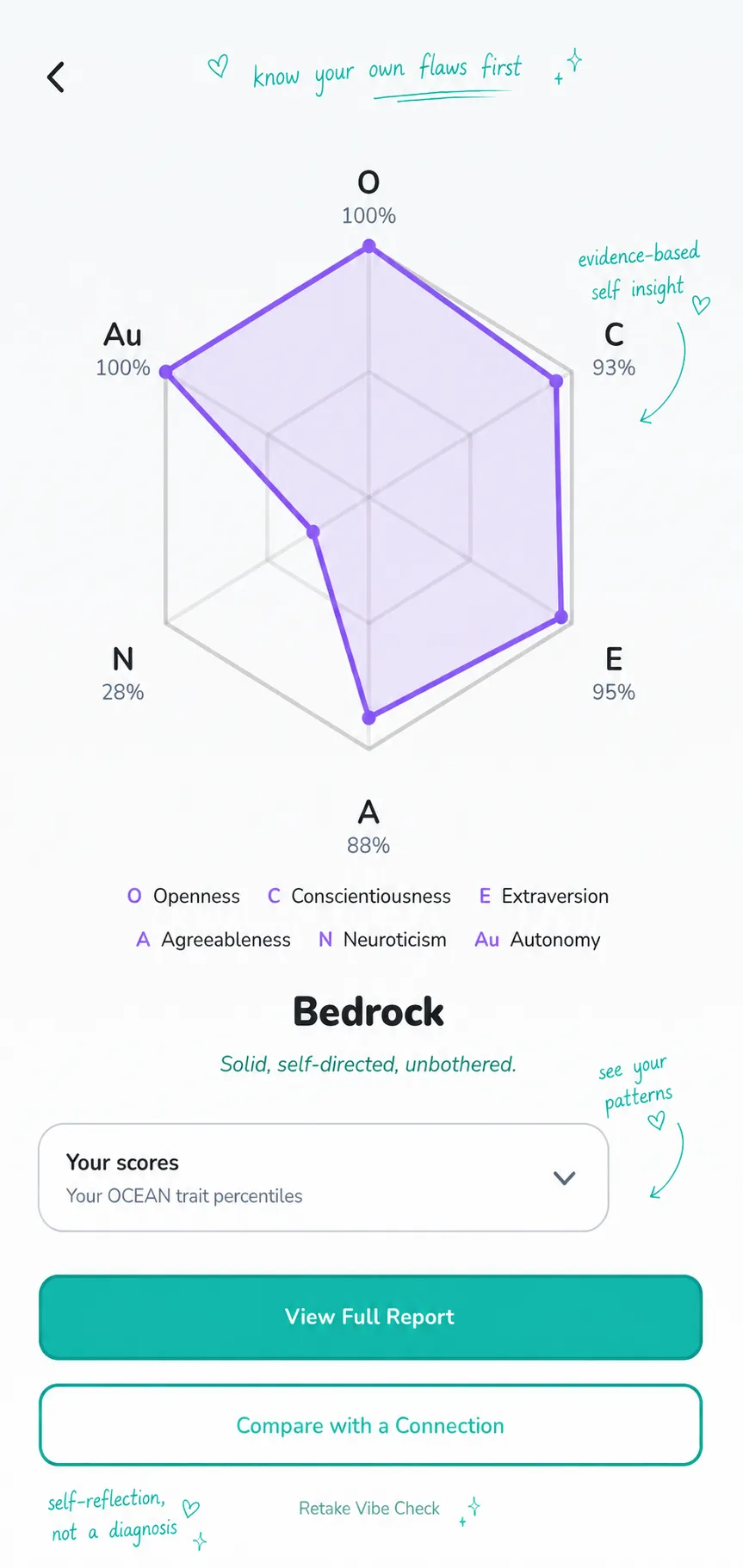
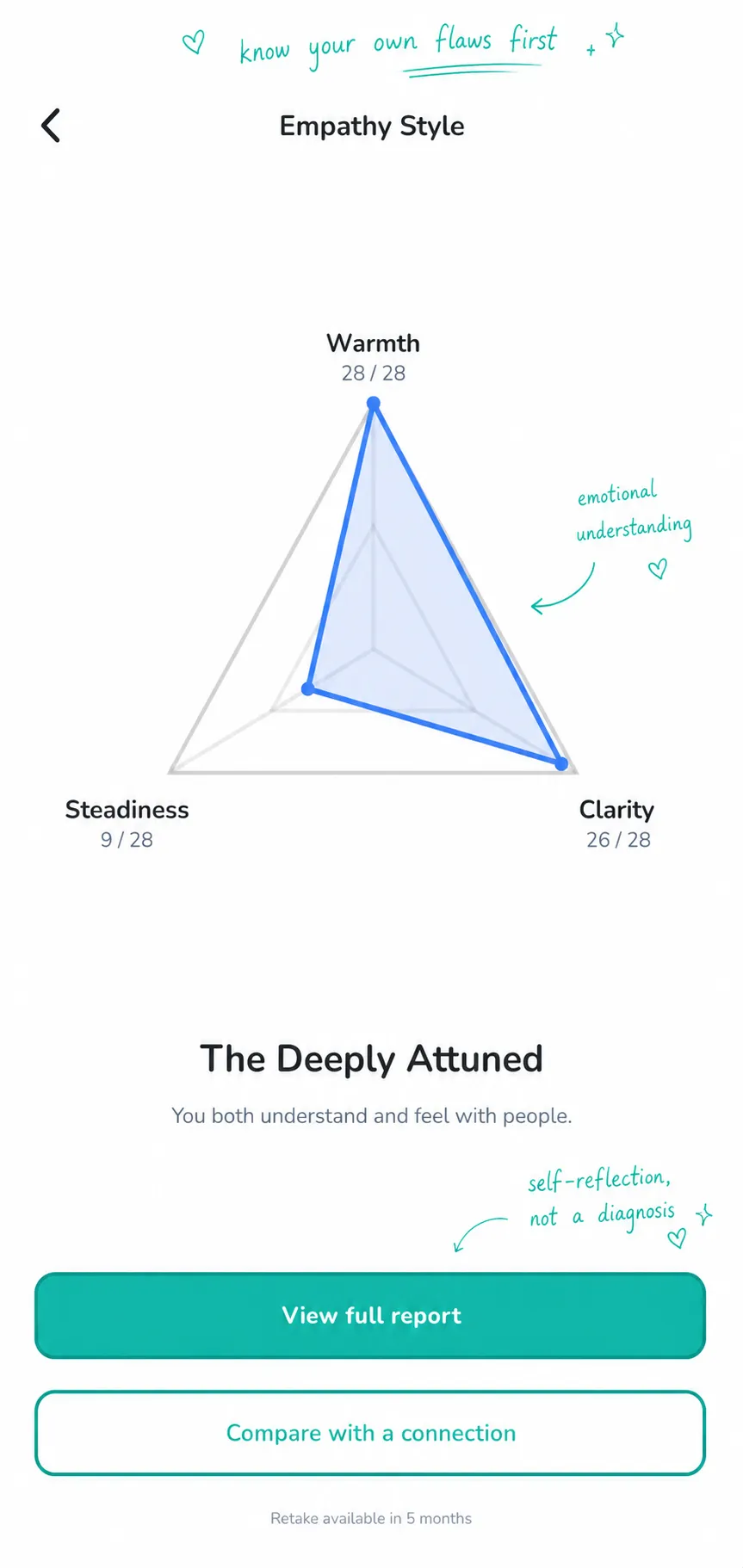
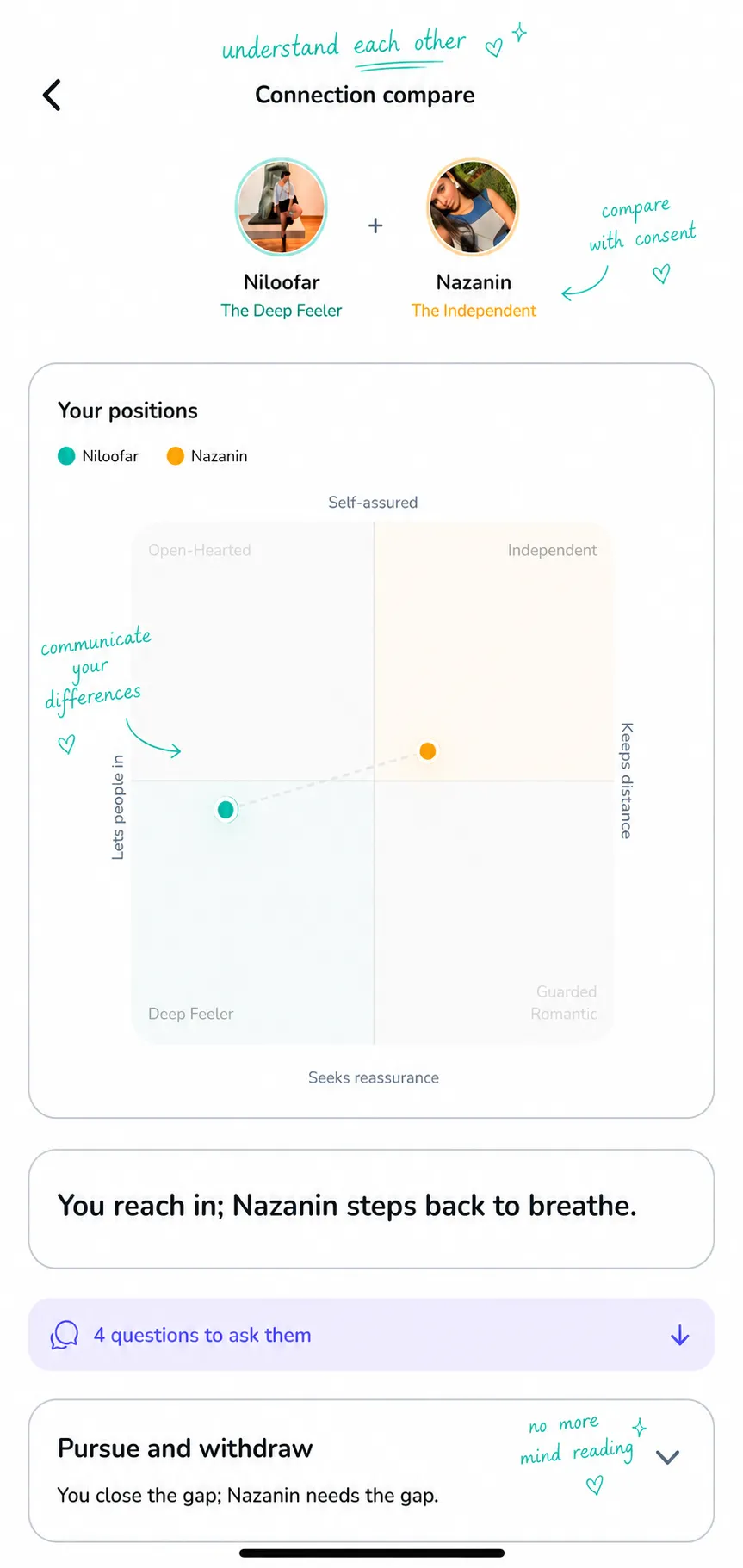
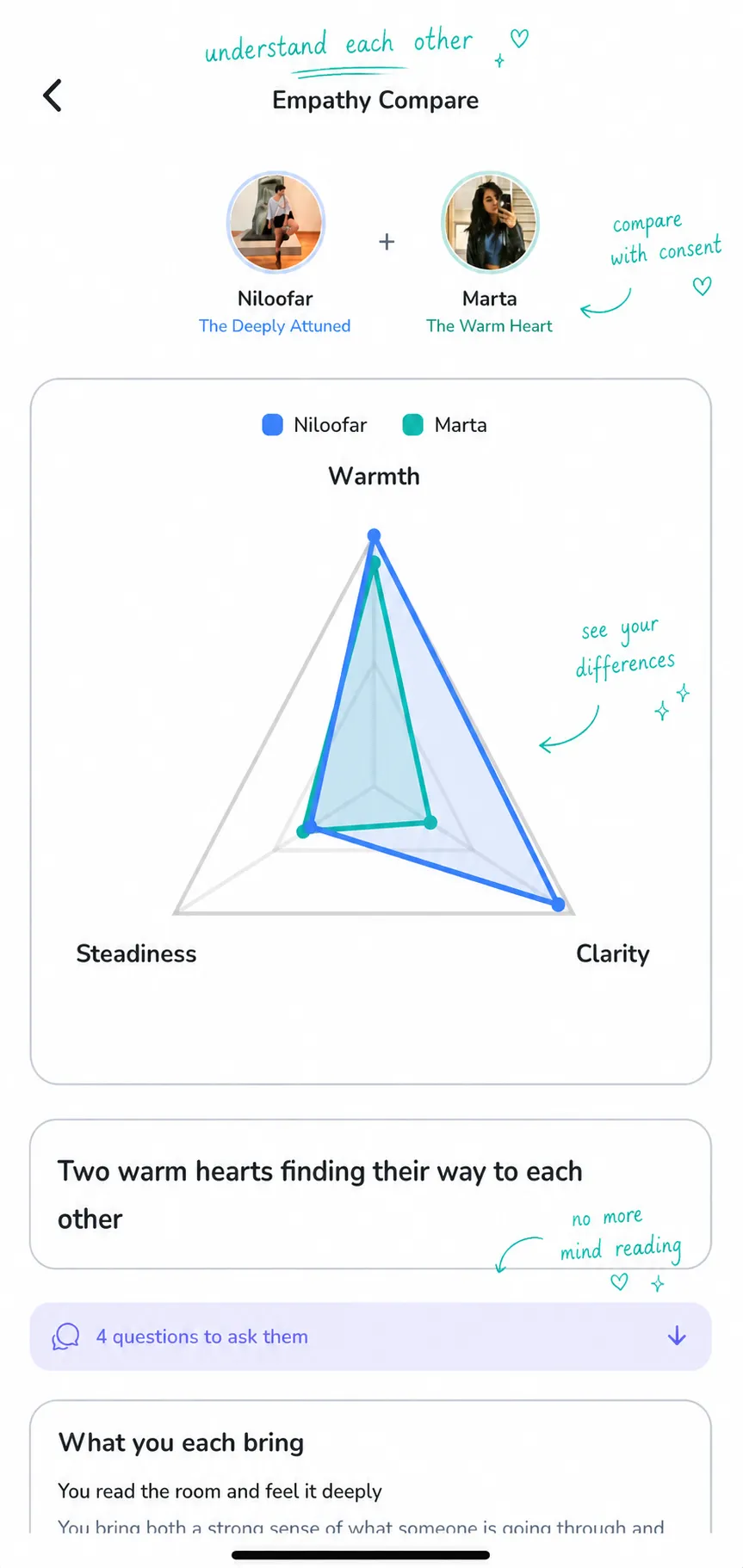
No more mind reading
Then I added a tool so people can, with consent, compare their assessment reports. I wrote the whole report in a way that doesn't shame anyone. It just gives you the power to communicate your differences. When you know that someone does something and it's not about you, you understand them better. The anxiety of mind reading and second-guessing is gone.
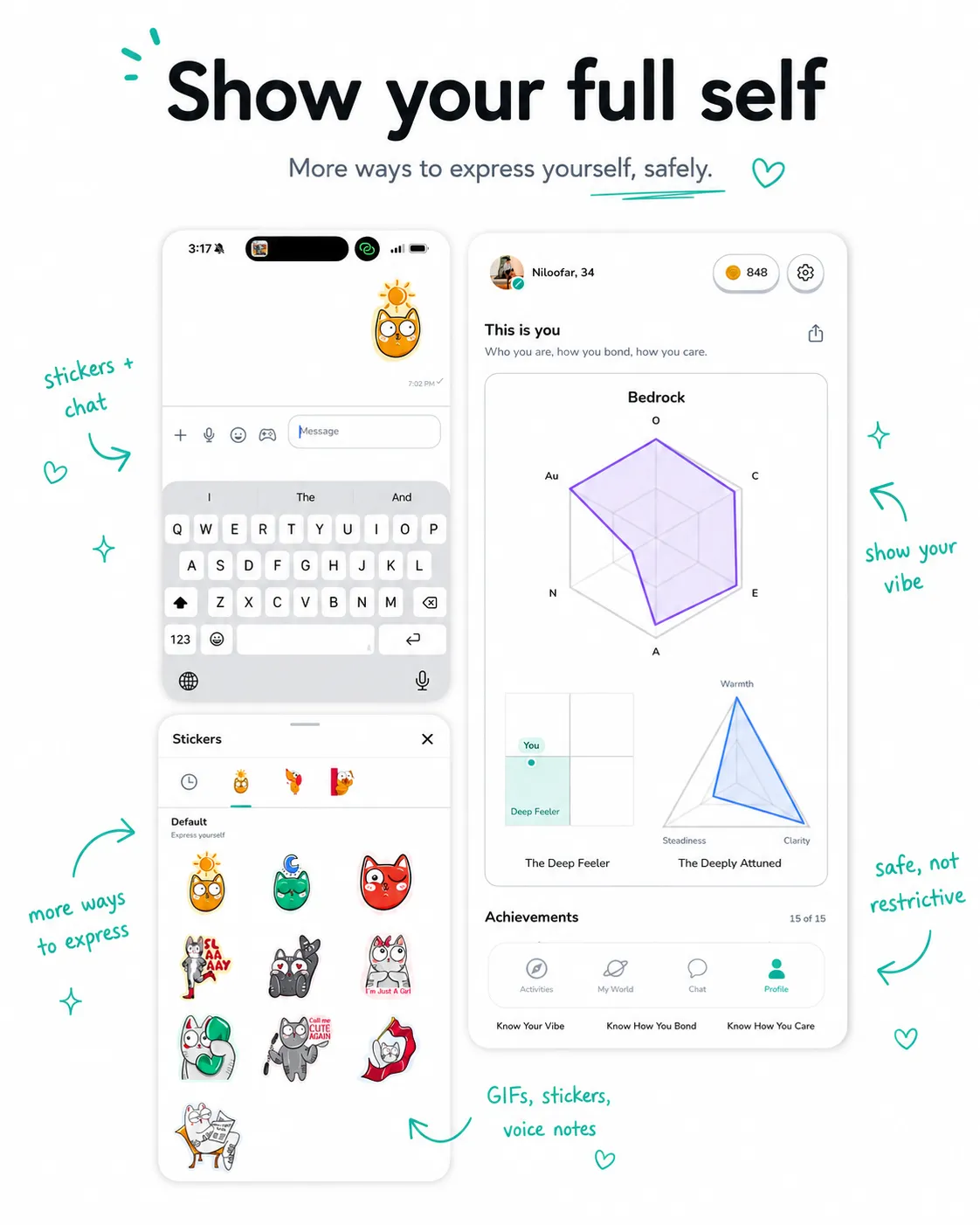
Show your full self
I observed how, in different messaging apps, you can show your full self better when the app gives you the right tools. The messaging apps I love let you send a GIF, a sticker, a voice note, a quick reaction, a reply, and let you edit or delete when you fumble. I wanted every one of those tools AND a genuinely safe space, so Gereh empowers you instead of locking you down.
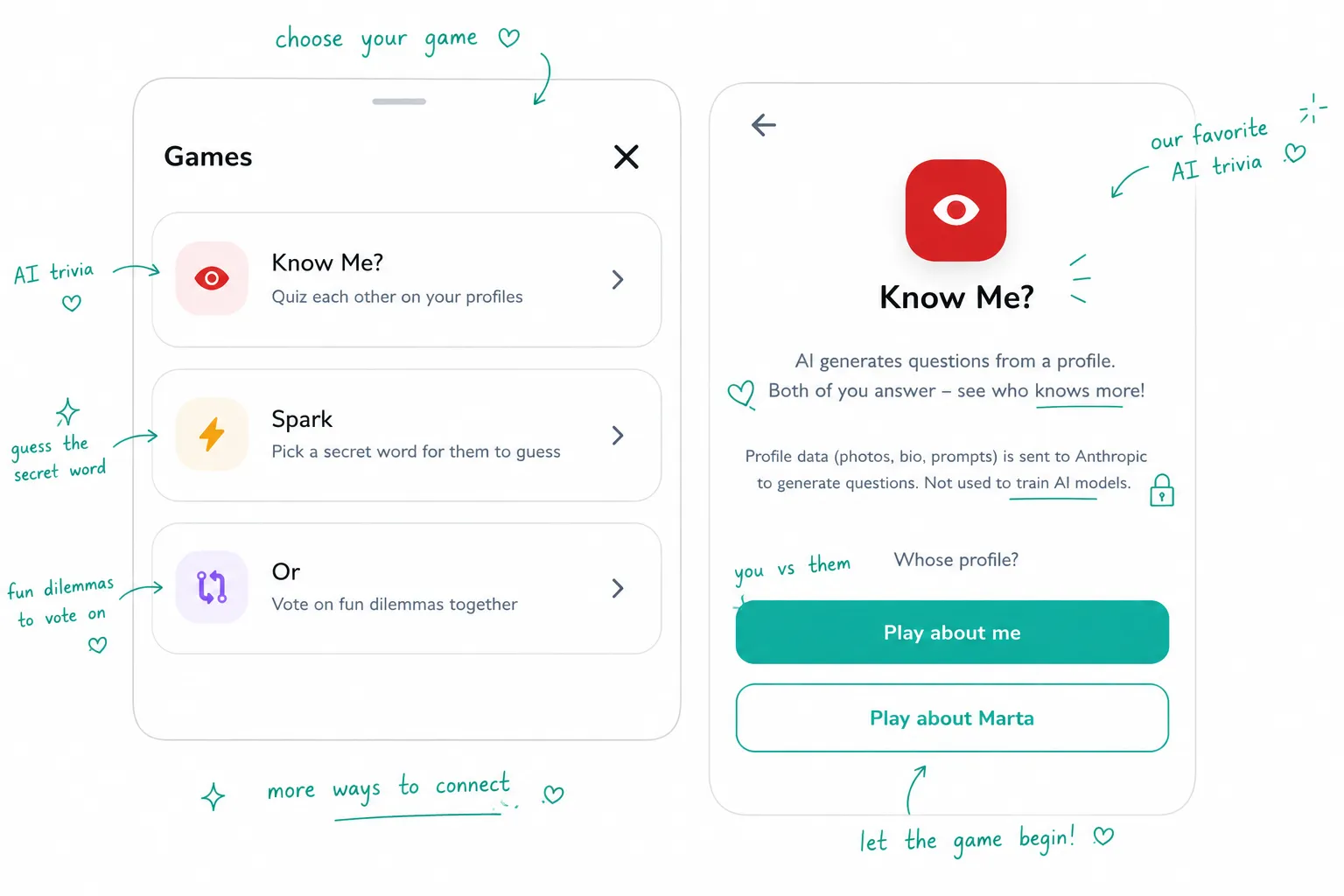
So I made games
The people I am closest to are the ones I have the least new things to say to. We covered the basics years ago, so the chat turns into logistics: how was your day, what do you want to eat. Fun the first time, who doesn't like to blabber about themselves? But not over and over; we hate repetition. I wanted a different experience every time, so you actually create memories, because novelty is what makes something memorable. So I created games. My all-time favorite is the AI trivia: the questions are generated from your profiles, and you test each other on how much you actually paid attention.